Machine Learning: Transformative power in Healthcare
Author: Zunaid Kazi
Chief Technology Officer
AI/NLP/ML
It’s all about data. The healthcare ecosystem is being transformed by the availability of massive amounts of data about individual patients, treatments, and outcomes. The data deluge makes it impossible for humans to analyze and make sense of the data.
Enter Machine Learning.
Machine learning is all about discovering new knowledge derived from finding patterns in data and then reasoning about the patterns. Companies like Infolytx are now applying the power of Machine Learning to change the way healthcare is provided from improving diagnostics, to predicting outcomes, to providing personalized care known as precision medicine.
It is all about the data. Your data.

Your electronic health record is the key to providing personalized care that will ensure optimal outcomes. Your data is not just the record of your vital statistics but also your medical and prescription history. The data today may include information about your genome, your microbiome, your nutritional and fitness regimes, and demographic data.
With machine learning, we are now just beginning to apply intelligent algorithms to enrich data sets and ensure optimal health care outcomes.
At Infolytx, we are leveraging our expertise in machine learning together with text analytics and cognitive technologies to help our clients with solutions in the healthcare space.
About Machine Learning (ML)

Before we describe some of the work we have done, perhaps it does make sense to delve a bit deeper into what ML is. As I have mentioned, ML is all about finding patterns from and reasoning about data. There are two different kinds of machine learning – supervised and unsupervised.
In supervised machine learning, you have data, and you have an outcome. What you are interested in is how the data is related to the outcome. For example, you may have patient data such as patient history, medications, lab results, existence or family history of diabetes, lifestyle habits such as smoking, etc. and you want to predict an outcome – whether the patient may develop heart disease. Knowing who in the past have developed heart disease, supervised machine learning will derive the relationship between patient attributes and outcomes.
In unsupervised machine learning, you do not have an outcome in mind. All you have is a bunch of data, and your goal is to find patterns and structures in data that are interesting in their own right. For example, in a collection of data about patients being treated for the same condition, are some patients outliers. This is unsupervised learning.
Deep Learning
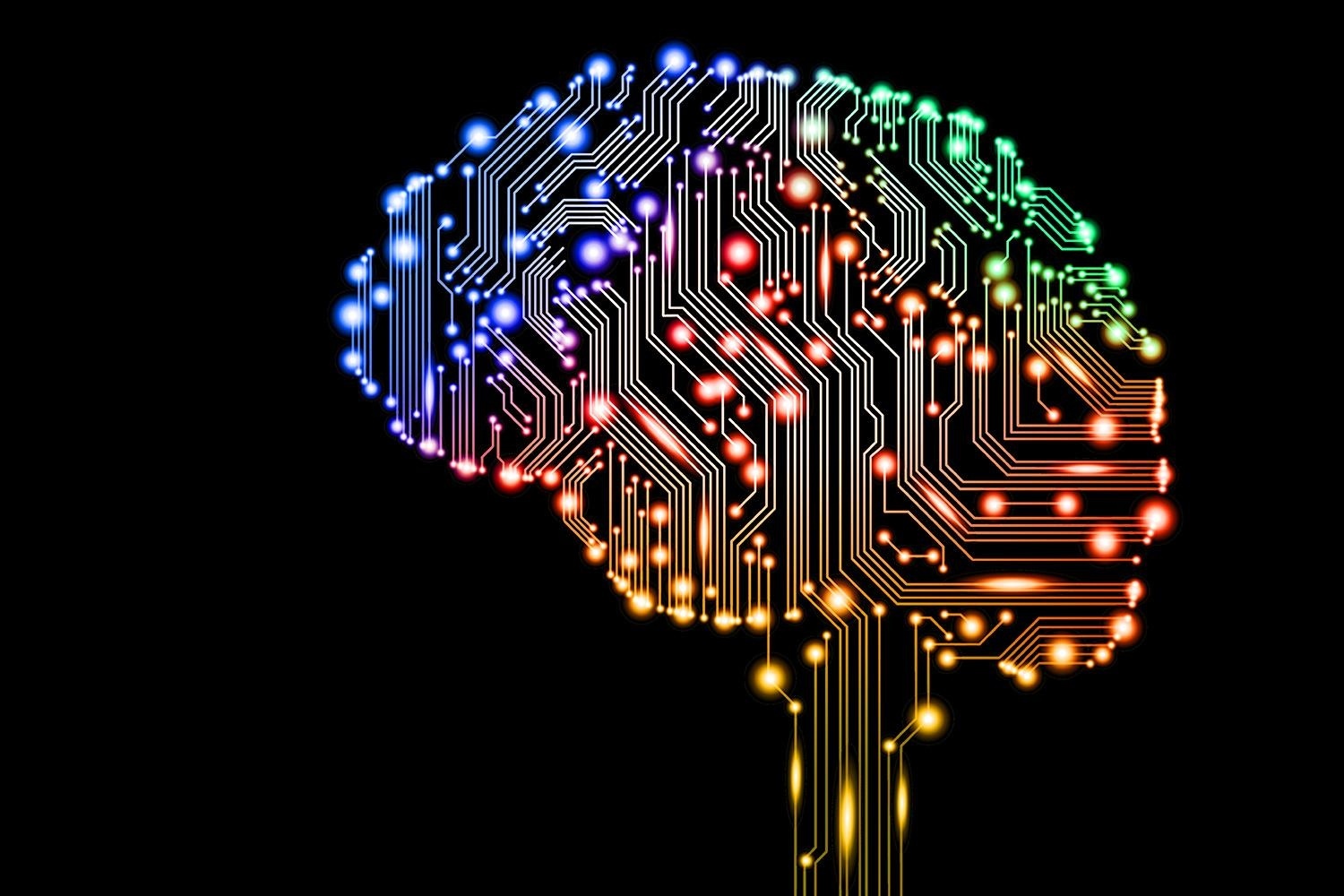
So what then is Deep Learning? There has been a lot of buzz recently about Deep Learning. In reality, Deep Learning itself is a particular kind of Machine Learning algorithm, one that uses what is known as artificial neural networks. A neural network is inspired by the way the brain is structured and is composed of layers of a network of nodes (neurons). There are at least two layers – the input and output, but there may be more hidden layers between these two. A neural network is considered deep if there is more than one hidden layer. Neural Networks have been around for a long time but only recently with improved algorithm design, improved computing power, and the availability of large amounts of data in the web age, have they begun to solve critical problems.
Infolytx, Machine Learning, and Healthcare
Infolytx has been working on multiple healthcare related projects and solutions where Machine Learning (and our other competencies) have been brought to bear. Here are some representative projects.
PharmacoWatch
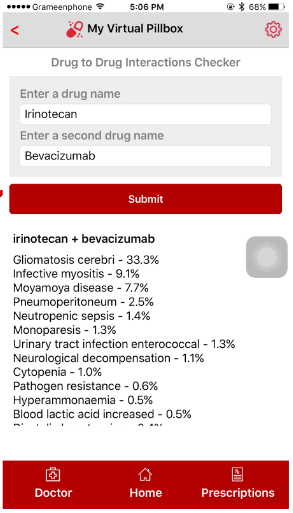
PharmacoWatch is a PAAS solution that among other features predict previously unknown drug-to-drug interactions and other adverse drug reactions (ADR) of approved pharmaceutical drugs in the USA. Data from FDA and Twitter were cleansed, normalized, and integrated. Supervised learning techniques were then used to predict which two drugs taken together could interact and generate adverse reactions. Learn more
Deep Care
Our Deep Care solution allows Certified Nursing Assistants (CNAs) and nurses to monitor more closely the ambulatory status of residents at elder care and assisted living facilities. It uses Deep Learning techniques to determine whether a resident is sitting, walking, standing or climbing stairs based on data acquired from wearable devices. Learn more
Pharmalytx

Our Pharmalytx mobile application helps pharmaceutical representatives needing guidance on who and what to promote while visiting their prospective client sites. Using three sources of data – prescription histories of doctors, physician demographics and pharma sales records, we used supervised machine learning algorithms to predict which are the most likely drugs that a given doctor would be willing to order. Learn more
The Future
Machine Learning has just begun to change the face of healthcare today. As algorithms and technologies improve, we can only see improved outcomes in healthcare delivery.
It is all about data. And analytics.